
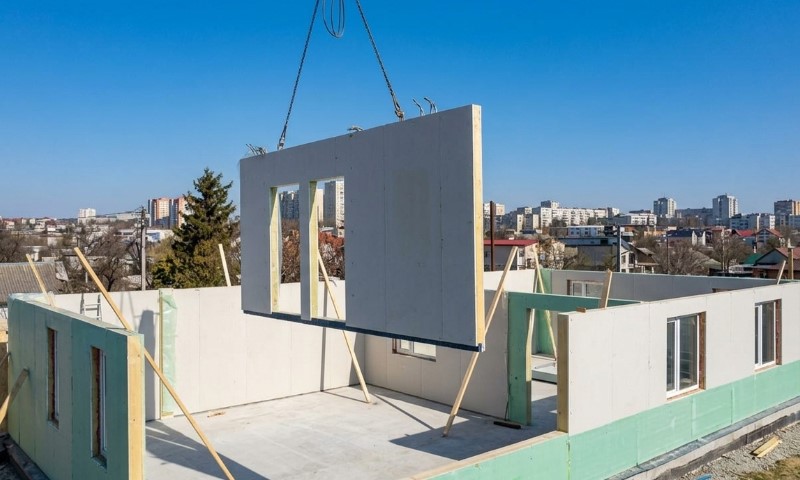
Conventional homebuilding often moves slowly, wastes materials, and adds carbon before a house is occupied. Materials may sit outdoors for long periods.
Crews often wait for earlier tasks to finish. Weather can slow progress, and rework can add more energy use, travel, and disposal.
Prefabricated homes change that process. Parts of a home, or full modules, are built off-site in a factory and then assembled at the property.
More work happens in a controlled setting, which gives builders better control over scheduling, materials, labor, and quality.
Prefabrication can lower environmental impact by shortening construction time, reducing waste, cutting embodied carbon, and limiting disruption around the property.
Let’s see how.
Faster Construction, Lower Environmental Impact
Prefabrication shortens construction schedules because factory production and property preparation can happen at the same time.
While one crew prepares the foundation, utilities, and access areas, another crew can build walls, floors, rooms, or full modules indoors.
Parallel work reduces idle time and helps move a project toward completion faster.
Recent data connects modular building with major gains in:
- Construction time can be cut by up to 50%.
- Costs can drop by up to 20%.
- Emissions can fall by about 22%.
Shorter schedules can reduce environmental impact because construction activity uses fuel, electricity, and transportation.
Fewer active workdays can mean:
- less equipment use
- fewer worker trips
- fewer delayed deliveries
- lower risk of weather-damaged materials
Indoor production also protects key materials.
Lumber, drywall, insulation, and other supplies are less exposed to rain, mud, wind, and heat.
Less damage means fewer replacements, less waste, and fewer added emissions.
Less Material Waste
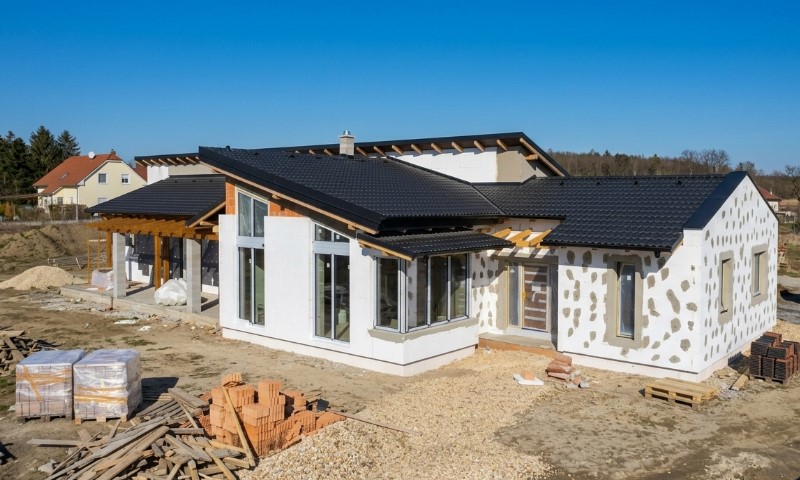
Factory production can reduce material waste because measuring, cutting, and assembly happen under controlled conditions.
Conventional jobsites often create waste through over-ordering, poor storage, cutting errors, weather exposure, and limited reuse options.
Several practices become easier in a factory setting:
- Repeated layouts support more accurate cutting plans.
- Leftover materials can be stored for later projects.
- Recycled materials can be used more consistently.
- Quality checks can catch errors before shipment.
Reducing waste matters because discarded materials already carry embodied carbon.
Energy has already been used to extract raw materials, manufacture products, package them, and transport them.
Throwing those materials away wastes both money and carbon.
Factory-built modules can also improve quality control.
Fewer mistakes reduce rework, and less rework means fewer replacement materials, fewer deliveries, and fewer extra labor hours.
Waste reduction is not only about landfill volume. It also lowers the hidden carbon cost attached to unused materials.
Lower Embodied Carbon
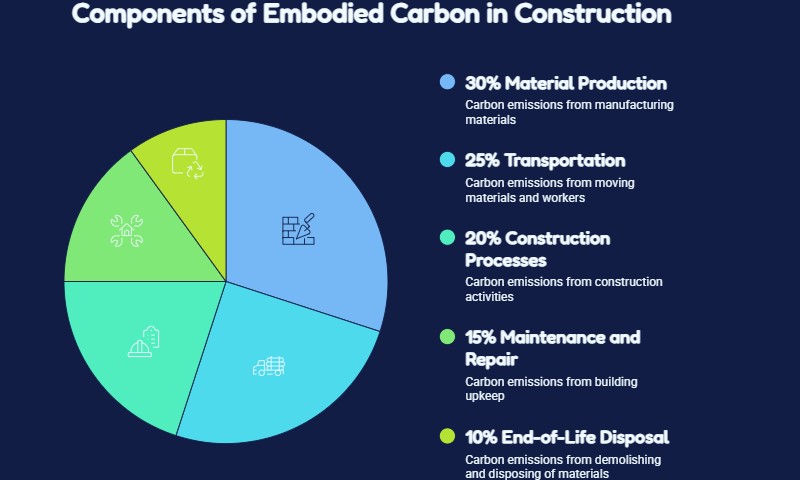
Embodied carbon refers to greenhouse gas emissions tied to producing, transporting, and assembling building materials.
Concrete, steel, wood products, insulation, drywall, finishes, factory energy, worker travel, equipment use, and waste management can all contribute.
A 2012 life cycle assessment compared modular and conventional homes in the United States.
It considered material production and transport, off-site and on-site energy use, worker transport, and waste management.
Average impacts were lower for modular construction across the categories studied, although results varied by project and company.
A study conducted in South Korea showed a major carbon gap between modular construction and conventional reinforced concrete construction:
| Construction Method | Total Emissions | Emissions per Square Meter |
| Modular construction | 135,787 kg-CO2 | 279.51 kg-CO2/m² |
| Conventional reinforced concrete construction | 212,559 kg-CO2 | 437.54 kg-CO2/m² |
Concrete use explains much of that difference. Ready-mixed concrete accounted for 68.92% of embodied carbon in the reinforced concrete method, but only 27.96% in the modular method.
By reducing reliance on concrete-heavy building systems, options such as Elythera metal frame houses support the broader shift toward lower embodied carbon in prefab housing.
Still, lower-carbon results depend on more than the structural system alone.
Long transportation distances, high-carbon materials, and energy-intensive factory operations can weaken the environmental benefit.
Strong results require efficient routing, lower-carbon material choices, and factory energy systems that limit emissions.
Reduced Site Disruption
View this post on Instagram
Prefabricated housing can reduce disruption because less work happens at the property.
Conventional construction often requires long periods of cutting, drilling, excavation, deliveries, machinery use, and waste handling.
Nearby residents may deal with dust, noise, traffic, and pollution for weeks or months.
Reduced on-site activity can lower several local impacts:
- Less dust is created by cutting and material handling
- Less noise caused by tools, trucks, and machinery
- Less soil disturbance during extended construction
- Less heavy machinery use near nearby homes
- Less disruption for local wildlife and vegetation
Local benefits matter because environmental impact is not limited to carbon totals.
Construction can affect air quality, runoff, soil health, traffic, and neighborhood comfort.
Prefabrication can reduce those pressures by sending more finished components to the site and shortening the active assembly period
Cleaner sites can also support better construction performance.
Less clutter, less exposure, and shorter timelines can reduce damage, mistakes, and delays.
Lower disruption at the property can support both local environmental quality and broader efficiency.
Limits and Trade-Offs
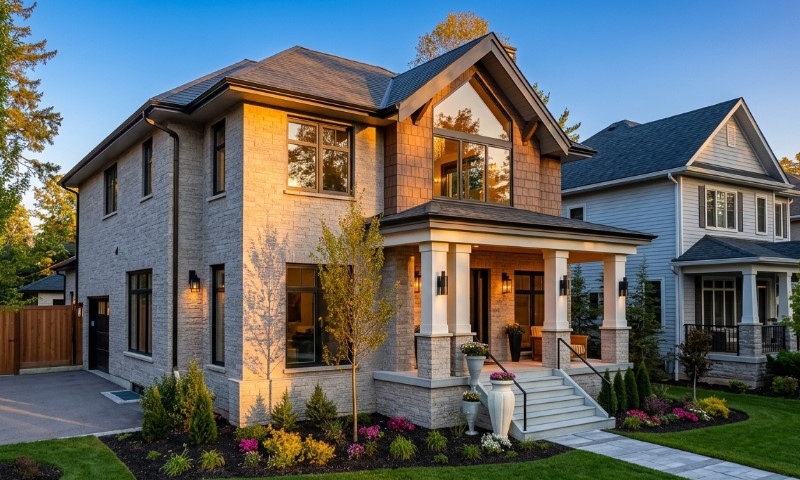
Prefabricated homes are not automatically sustainable. Results depend on design, material selection, transportation distance, factory energy, and project management.
A poorly planned prefab project can still create high emissions and unnecessary waste.
Transportation is one major trade-off.
Large modules may need special trucks, careful routing, and multiple deliveries.
Long distances between the factory and building property can add emissions and weaken the carbon advantage.
Cost can also be a barrier in some projects.
A South Korean case study found lower embodied carbon but higher direct construction cost for modular construction:
- Modular construction costs $477,332.
- Modular construction measured $982.57 per square meter.
- Reinforced concrete construction costs $441,580.
- Reinforced concrete construction measured $908.97 per square meter.
- Modular construction was about 8.1% more expensive in that case.
Carbon and cost comparisons also depend on the scope of analysis.
One study focused on initial material production and did not fully include possible benefits such as reuse, easier repair, or high recycling rates.
A wider long-term view could make modular construction look stronger, especially when components are designed for repair, disassembly, or reuse.
Efficient logistics, low-waste production, durable materials, and low-carbon design choices determine how much environmental benefit prefabricated homes can deliver.
FAQs
Summary
Prefabricated homes can make housing construction faster and less wasteful.
Factory production allows better control over materials, labor, quality, and scheduling.
Off-site production can happen while the property is prepared, which can shorten build time and reduce construction-related emissions.
Research supports the claim that modular construction can lower environmental impact, but results vary by project.
Prefabrication is not a perfect solution, but done well, it can help make home construction faster, cleaner, and lower-carbon.